
Anbox Cloud
Run containerized and virtualized Android™ at scale in the cloud
Run, stream, test, and automate Android workloads without relying on physical devices, emulators, or custom infrastructure.
Anbox Cloud is Canonical’s platform for running Android at scale across cloud, edge, and bare -metal environments. Containerized Android helps teams stream, test, and automate Android applications efficiently. Fully virtualized Android enables complete system images, custom kernels, Cuttlefish workflows, and platform validation with full system fidelity. Both execution models are managed through one cloud-native platform, simplifying your team’s workflow.
Anbox Cloud in numbers
6+
Years on the market
~1 minute
To deploy the appliance
What is Anbox Cloud?
Anbox Cloud provides the operational layer for Android workloads: orchestration, lifecycle management, GPU acceleration, low-latency streaming, and automation.
Teams can launch Android instances on demand, integrate them into testing or streaming workflows, and operate them consistently from development to production. The result is faster execution, simpler operations, and more predictable Android workloads at scale.
Use cases
Stream Android applications and games from the cloud to browsers, smart TVs, thin clients, mobile devices, and other connected endpoints.
Anbox Cloud provides the Android runtime, GPU acceleration, session management, and low-latency streaming needed to deliver interactive Android experiences at scale without relying on local devices.
Run reproducible Android environments for automated testing, QA, localization, regression testing, and release validation.
Use Anbox Cloud to launch Android instances on demand, automate testing workflows, and scale parallel runs without maintaining local emulator farms or large physical device fleets.
Build scalable Android environments that developers, testers, support teams, and business users can access remotely.
Teams can provision Android instances on demand, stream interactive sessions, reset environments, automate workflows, run demos, and integrate Android applications into enterprise processes.
Run customized Android Automotive OS and embedded Android images in cloud or bare metal infrastructure.
With virtualized Android, teams can validate complete system images with their own kernel, system services, and low-level components in reproducible environments.
Develop, customize, and validate Android system images, kernels, system services, and hardware abstraction layers.
Virtualized Android provides the system fidelity required when Android itself is under development, not just the applications running on top of it.
Two execution models, one platform
Choose the right Android approach for your workload
Anbox Cloud supports two complementary ways to run Android on one platform, offering a consistent experience.
Both models are managed through the same Anbox Cloud platform, APIs, automation, and operational workflows.
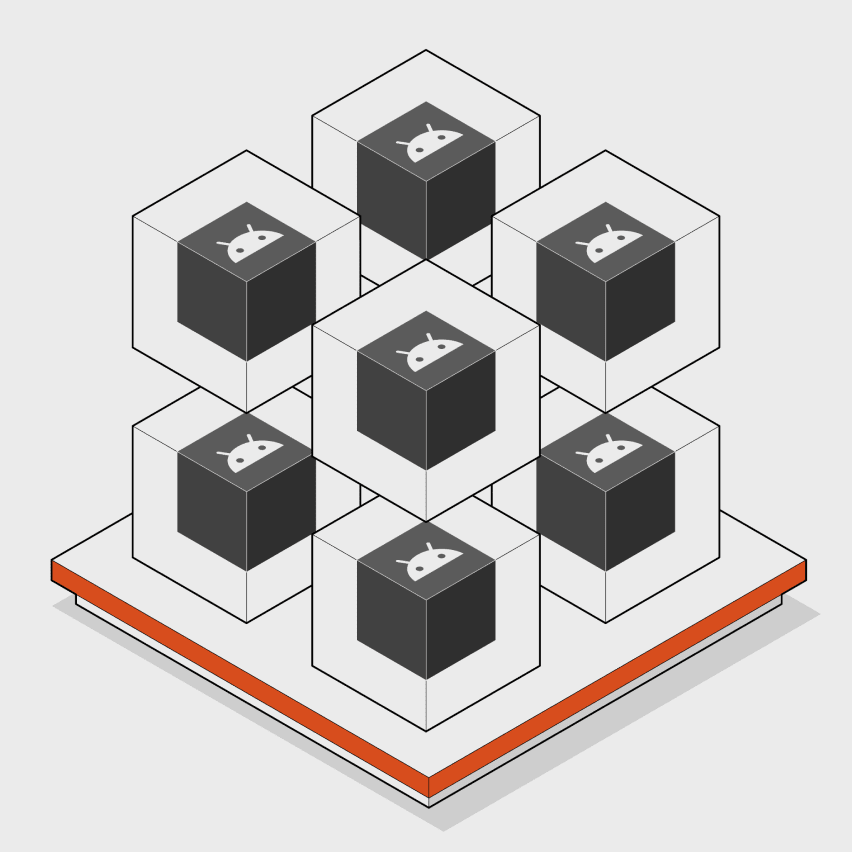
Containerized Android
Containerized Android launches quickly, uses infrastructure efficiently, and scales to large numbers of instances. It is optimized for application-centric workloads.
Choose containerized Android for streaming applications streaming, gaming, automated testing, enterprise automation, and CI/CD workloads where Android is primarily used as an application runtime.
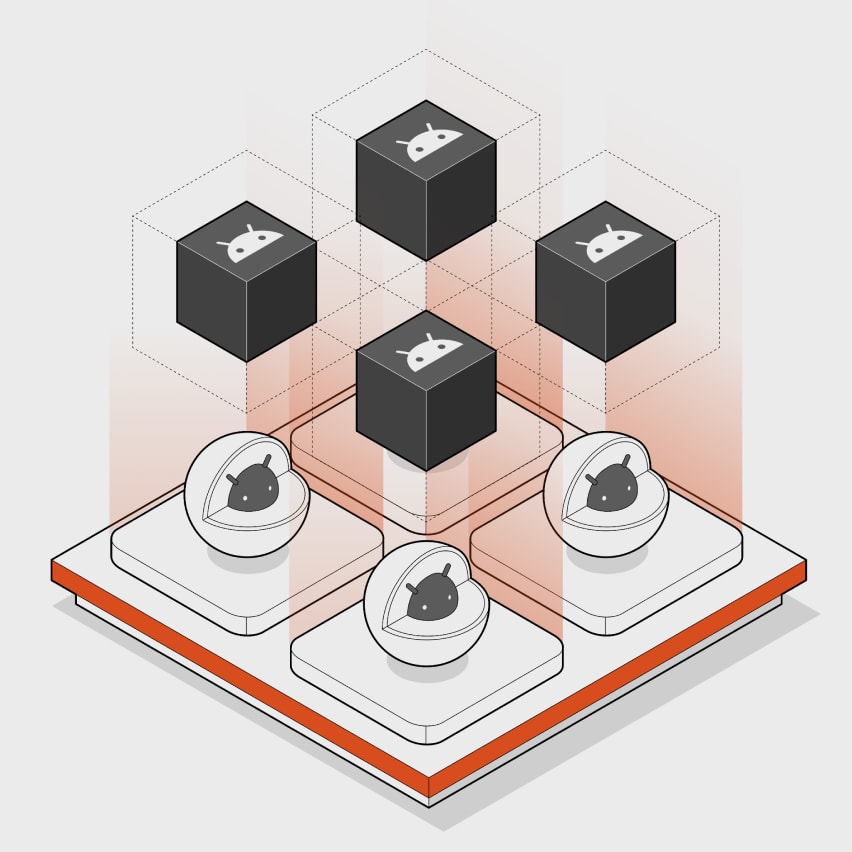
Virtualized Android
Virtualized Android is designed to help enterprises safely develop, modify, and test the core Android Operating System itself without expensive, rigid physical hardware.
Choose virtualized Android when Android itself is being developed, customized, validated, or certified. This includes Cuttlefish-based workflows, AOSP and Android Automotive OS builds, custom kernels, OEM images, and validation suites such as the Compatibility Test Suite (CTS) and Vendor Test Suite (VTS), where Android needs to behave as a complete system.
New in Anbox Cloud 1.30: fully virtualized Android
Run complete Android system images in the cloud
With fully virtualized Android, Anbox Cloud can run Android as a complete virtual machine with its own kernel, boot sequence, system services, and security model.
This expands Anbox Cloud beyond application-centric workloads and enables teams to move system-level Android development, validation, and customization into scalable cloud infrastructure.
Virtualized Android is especially valuable when Android itself is the product being built or tested. Teams can run complete Android system images while preserving kernel ownership, system behavior, Android security assumptions, and the execution fidelity required for low-level validation workflows.
Bring your own Android image
Many Android platform teams already produce their own system images for development and validation. These images may include custom kernels, modified system services, vendor components, hardware abstraction layers, or Android Automotive OS customizations.
With virtualized Android, teams can bring AOSP-based images, Cuttlefish artifacts, AAOS builds, or vendor-modified Android systems and run them through Anbox Cloud.
Anbox Cloud provides the orchestration, lifecycle management, networking, automation, and streaming layer around those systems, allowing teams to reuse existing Android build outputs while moving execution into scalable infrastructure.
Talk to an expert ›
Deploy across cloud, edge,
and bare metal
Anbox Cloud is designed to run wherever your Android workloads need to run: across public clouds, private clouds, bare metal, and edge locations.
It supports Arm and x86 infrastructure, GPU acceleration for graphics-heavy workloads, and deployment patterns that can be adapted for streaming, testing, automation, and system validation.
Teams can run Anbox Cloud near users for low latency streaming, in private infrastructure for control and compliance, or on public cloud infrastructure for elasticity and global reach.
Anbox Cloud deployment options
Anbox Cloud Appliance
A simplified deployment option for evaluation, proofs of concept, and smaller environments.
Use Anbox Cloud Appliance when you want to get started quickly and test Anbox Cloud capabilities with minimal setup.
Charmed Anbox Cloud
For teams requiring high availability, custom infrastructure, and integration with existing operations, Charmed Anbox Cloud offers a production-grade deployment model.
Use Charmed Anbox Cloud for larger deployments, for production environments, and for infrastructure that you want to run yourself with your own platform or cloud team.
Managed Anbox Cloud
A fully managed option for teams who want Canonical to manage Anbox Cloud for them.
Choose Managed Anbox Cloud so your teams can focus on Android workloads; let Canonical manage the platform operations.
Anbox Cloud deployment options

Anbox Cloud Appliance
A simplified deployment option for evaluation, proofs of concept, and smaller environments.
Use Anbox Cloud Appliance when you want to get started quickly and test Anbox Cloud capabilities with minimal setup.
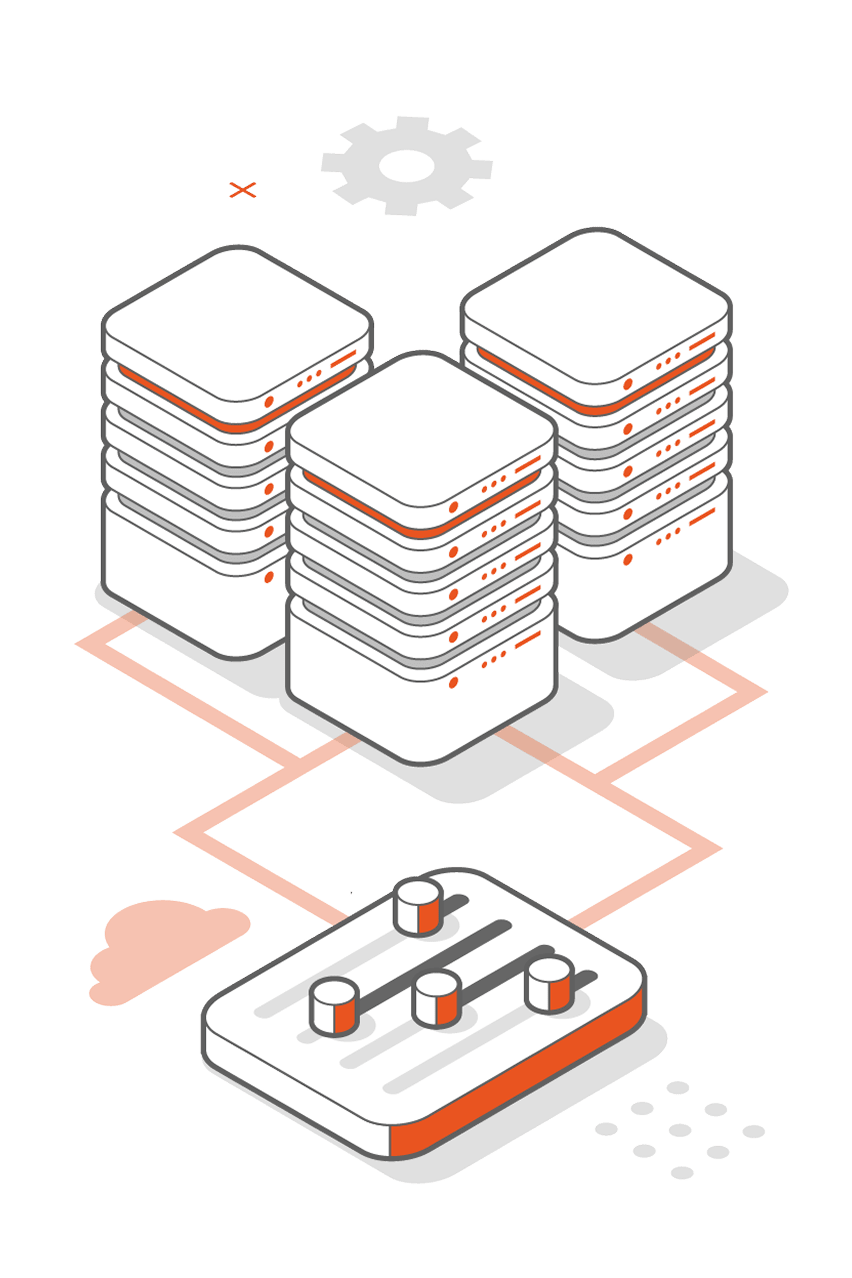
Charmed Anbox Cloud
For teams requiring high availability, custom infrastructure, and integration with existing operations, Charmed Anbox Cloud offers a production-grade deployment model.
Use Charmed Anbox Cloud for larger deployments, for production environments, and for infrastructure that you want to run yourself with your own platform or cloud team.

Managed Anbox Cloud
A fully managed option for teams who want Canonical to manage Anbox Cloud for them.
Choose Managed Anbox Cloud so your teams can focus on Android workloads; let Canonical manage the platform operations.
Supported infrastructure


Proven on state-of-the-art
Arm infrastructure
Anbox Cloud supports running Android workloads on Arm-based cloud and bare metal infrastructure including Google Cloud C4A metal.
For virtualized Android workloads, C4A metal enables Android VMs to run directly on bare metal, removing an additional nested virtualization layer while maintaining Anbox Cloud orchestration, automation, and streaming.
This makes C4A metal particularly relevant for Cuttlefish, validating the Android system, and for workloads that require native Arm performance and predictable infrastructure behavior. Watch the video to discover how Anbox Cloud can run 90+ Android instances on C4A metal.
Why teams choose Anbox Cloud

“NVIDIA T4 GPUs are now featured in second-generation Arm servers at cloud service providers, delivering significantly improved app-streams-per-server and lower cost per-user. Canonical's Anbox platform provides a complete solution to containerize mobile apps and works seamlessly with NVIDIA's Linux and Android software stacks. Together, Canonical and NVIDIA provide a scalable solution to virtualize mobile apps, and stream them securely to the growing population of 5G mobile devices.”
Phil Eisler
Vice President, Cloud Streaming
NVIDIA

“It's no secret that TCO is a key driver of cloud provider decisions. And that's what gets Arm excited about the Android in the Cloud solution that Ampere, Canonical and NETINT have developed…for Android in the Cloud use cases like cloud gaming, Android app development and IoT enablement to cloud providers.”
Robbie Williamson
Senior Director, Solutions Engineering
Arm

“The combination of Ampere's Arm-based servers with a provisioned virtualization solution like Canonical's Anbox Cloud delivers the flexible, high-performance, and secure infrastructure that developers need in order to deliver a better user experience for consumers.”
Jeff Wittich
Chief Product Officer
Ampere

“Canonical's inclusion of the Intel Visual Cloud Accelerator Card - Rendering (VCAC-R) as part of their newly launched Anbox Cloud solution will enable the delivery of enhanced cloud and mobile gaming experiences on Android devices, supporting an emerging industry opportunity today, and for the upcoming 5G era.”
Lynn Comp
Vice President, Data Platforms Group and General manager of the Visual Cloud Division
Intel
Long-term enterprise support
and security coverage
Anbox Cloud is supported by Canonical's enterprise support and the Ubuntu Pro security, maintenance, and compliance ecosystem.
Organizations can access enterprise-grade 24/7 support options, maintained Anbox Cloud components, security updates, and up to 15 years of security coverage for supported Ubuntu-based infrastructure.
Canonical can support both Anbox Cloud and the underlying Ubuntu environment, helping teams to keep their Android infrastructure production-ready, while reducing operational risk and supporting the security and reliability of their systems.
With Canonical's support, teams get:
- Enterprise-grade 24/7 support options
- Long-term security maintenance
- Maintained Anbox Cloud components
- Security updates for supported infrastructure
- Guidance for production architecture and operations
- Optional managed service and consulting support
Trusted by


Ready to run Android at scale?
Learn more about Anbox Cloud
Android is a trademark of Google LLC.
Anbox Cloud uses assets available through the Android Open Source Project.
The Android robot is reproduced or modified from work created and shared by Google and used according to terms described in the Creative Commons 3.0 Attribution License.